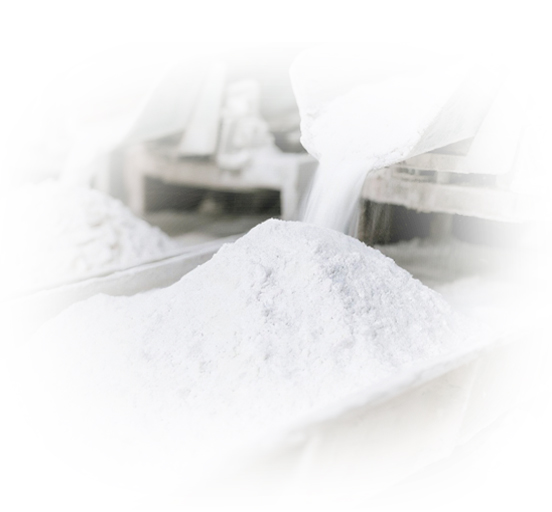










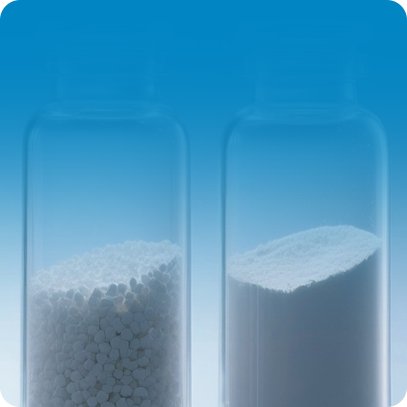









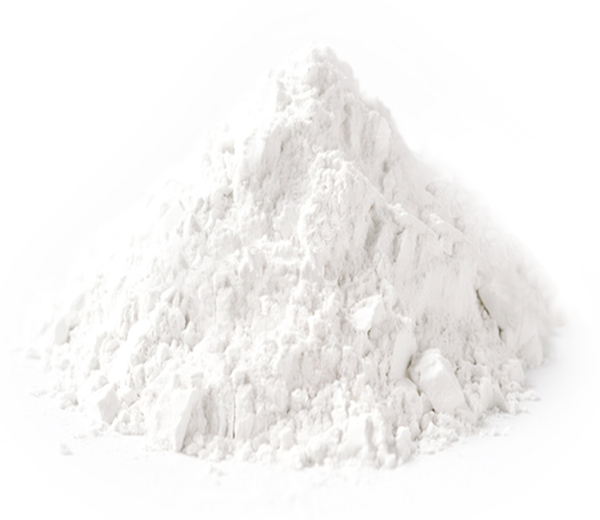
Talc powder is a widely used mineral, primarily composed of hydrous magnesium silicate minerals, characterized by its smooth and soft properties. Talc powder exhibits characteristics such as electrical insulation, high temperature resistance, strong acid resistance, strong alkali resistance, chemical stability, and lubricity. Among these, ultrafine talc powder possesses strong adsorption properties for oils, making it widely used in industry.
Talc powder also possesses excellent physical and chemical properties such as lubricity, heat resistance, electrical insulation, high melting point, chemical stability, good hiding power, and softness.
Talc is a typical layered silicate mineral, represented by its oxide composition of 3MgO·4SiO2·H2O. Its chemical composition is 31.72% MgO, 63.52% SiO2, and 4.76% H2O. Talc typically exhibits lamellar properties and belongs to the monoclinic crystal system. Its crystals often occur as lamellar, foliated, granular, fibrous aggregates, or dense masses. Under mechanical force, these lamellae can easily delaminate into individual sheets. Each lamella consists of two parallel upper and lower surfaces, along with irregular edge surfaces. The parallel surfaces are hydrophobic and oleophilic, while the edge surfaces are oleophobic and hydrophilic. The unique lamellar and layered three-dimensional structure of talc powder provides excellent rigidity, creep resistance, and mechanical properties to materials. It not only enhances the overall performance of materials but also reduces costs. Therefore, it is widely used

Annual production of 60,000 tons
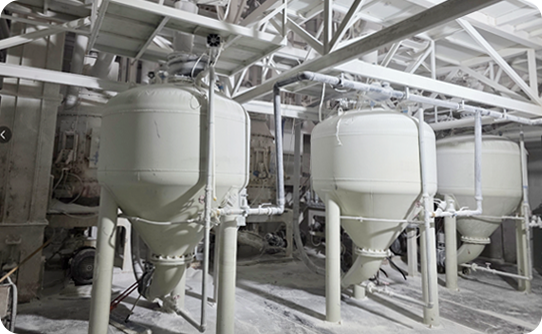
The deep processing capacity of talcum powder reaches 100,000 tons
Possessing 12 specialized product production lines
Currently, we can produce talcum powder with a fineness of up to 10,000 mesh


 CN
CN